Nepali wedding traditions explained
From the groom’s procession to the sindoor, here are the customs you will see at many Nepali weddings.
4 min read · By the Everest team · Updated November 2026
Many Nepali Hindu weddings include the Janti (the groom’s procession, often with a Panche Baja band), Swayambar (exchanging garlands), Kanyadan (the bride’s parents giving her hand), the sacred fire and vows, Sindoor (vermilion placed in the bride’s hair parting), and the Potey and Tilahari necklaces. Customs vary widely between communities, so families adapt them.
- Janti: the groom’s side arrives in procession.
- Kanyadan, the sacred fire and Sindoor form the heart of the ceremony.
- Red is the traditional bridal colour.
How does a Nepali wedding unfold?
A traditional Nepali Hindu wedding usually spans more than one day and moves between the bride’s and groom’s families. Engagement and blessing ceremonies come first, the main wedding day centres on rituals at the bride’s side, and celebrations continue as the bride is welcomed into the groom’s family. Nepal is home to many communities, including Bahun, Chhetri, Newar, Gurung, Magar, Tamang, Sherpa and Rai families, and their customs differ, so treat this as a general overview.
What are the key rituals in a Nepali wedding?
| Ritual | What happens |
|---|---|
| Janti | The groom’s family and friends travel together to the bride’s side in a festive procession, traditionally accompanied by musicians. |
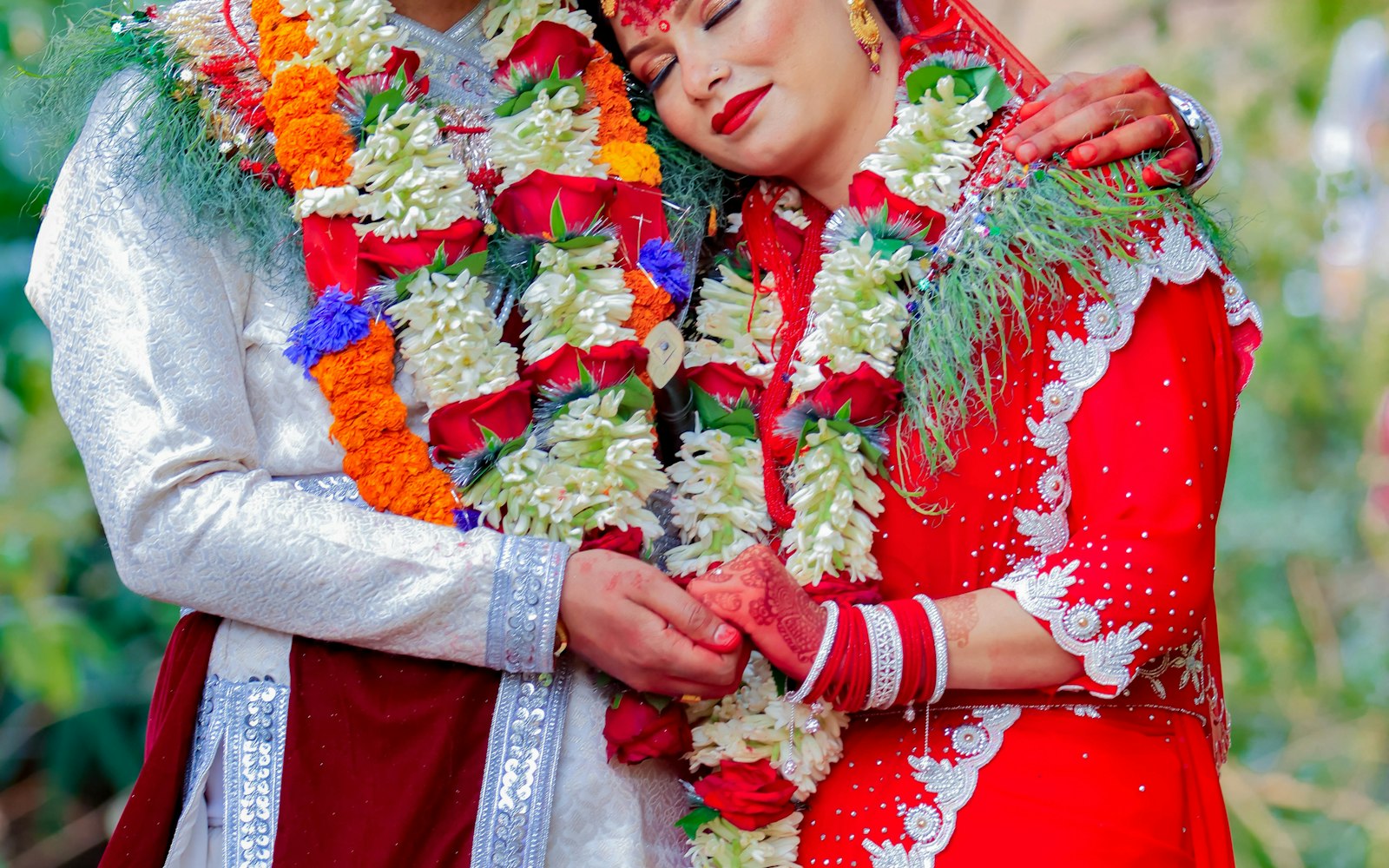
| Swayambar | The bride and groom exchange flower garlands, accepting each other. |
| Kanyadan | The bride’s parents give their daughter’s hand to the groom, often one of the most emotional moments of the day. |
| Sacred fire and vows | The couple completes rituals before the sacred fire, led by a priest, including walking around it together. |
| Sindoor | The groom places red vermilion powder along the parting of the bride’s hair. |
| Bidaai | The bride says farewell to her family as she leaves with the groom’s side. |
| Welcome and Mukh Herne | The bride is welcomed into her new home, and relatives come to see the bride’s face and give blessings and gifts. |
What do Sindoor, Potey and Tilahari mean?
Sindoor is the red vermilion in the bride’s hair parting and is a traditional sign of marriage. Potey is a necklace of small glass beads, usually red or green, and the Tilahari is a long gold pendant often worn with it. Brides traditionally wear red, such as a red sari or lehenga, with gold jewellery, while grooms often wear the daura suruwal or a sherwani with the Nepali topi.
What music and celebrations happen?
The Panche Baja, a traditional ensemble of five instruments, has long accompanied the Janti and other wedding moments, though many families now add a DJ or live band for the reception. Expect dancing, plenty of food and a lively gathering of relatives from both sides. Some families also hold mehendi, haldi or sangeet events before the wedding, especially when blending traditions.
What should guests know?
- What to wear: bright, festive clothing is welcome. Avoid all-white outfits and, in many families, all-black.
- Gifts: money in an envelope is common, given with blessings.
- Timing: rituals follow an auspicious time set by the priest and can run long, so arrive early and be patient.
- Food: expect a generous meal; some families seat elders first.
How do families plan a Nepali wedding in Canada?
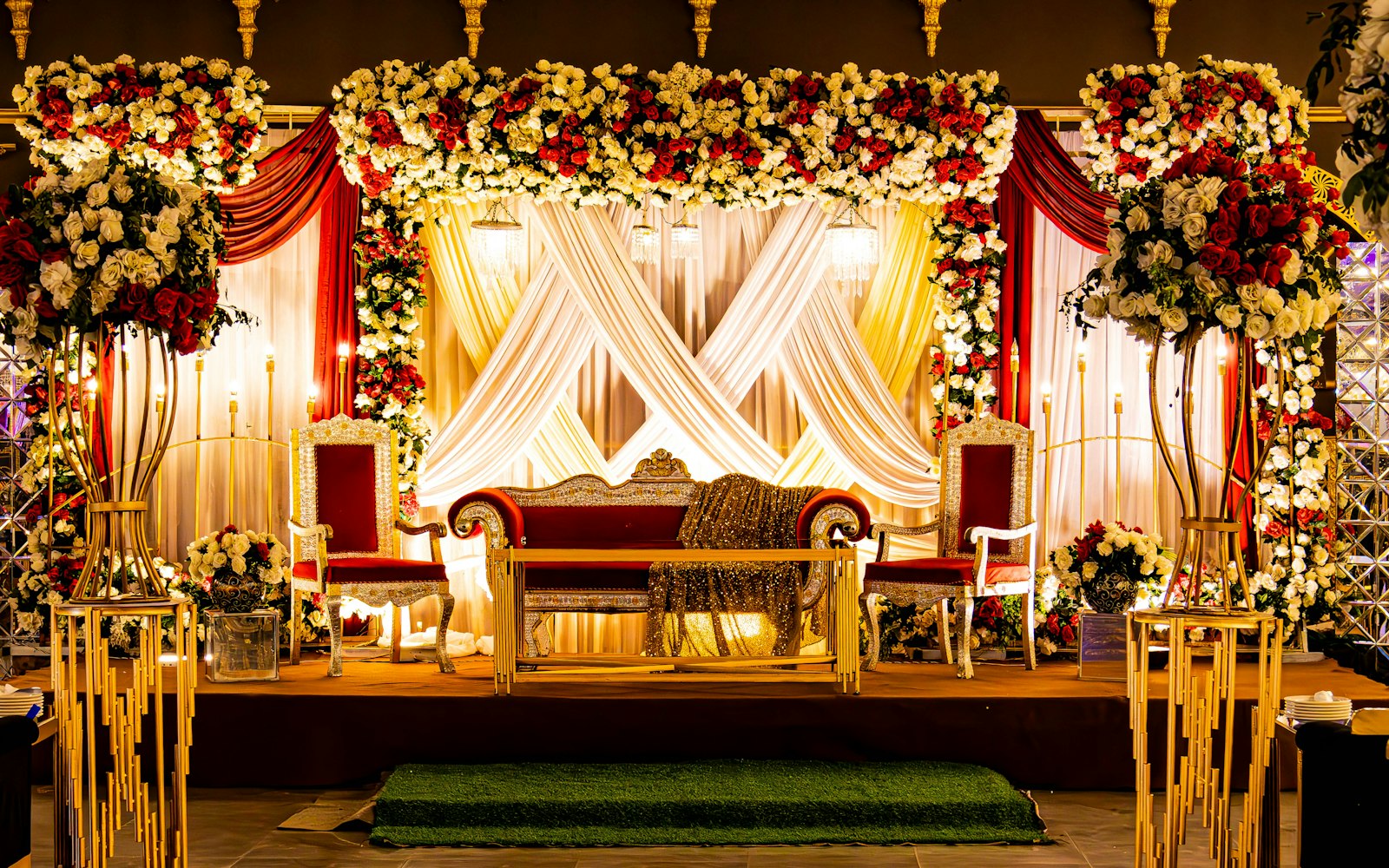
Families in Canada often combine several rituals into one or two days and hold the ceremony and reception in the same venue so elders do not need to travel between locations. Key needs include space for a mandap and sacred fire area (with fire-safety approval from the venue), a kitchen that can cook Nepali dishes properly, room for a large guest list, and time in the schedule for the priest’s rituals.
Everest hosts Nepali weddings with in-house chefs who cook Nepali cuisine, a 30 ft stage for the mandap and room for up to 375 guests. For other traditions, see our guide to planning a multicultural wedding.
Quick answers
What is Janti in a Nepali wedding?
The festive procession of the groom’s family and friends to the bride’s side, traditionally with music.
What does Sindoor mean?
Red vermilion placed in the parting of the bride’s hair by the groom, a traditional sign of marriage.
What is a Potey?
A necklace of small glass beads, usually red or green, worn by married women, often with a gold Tilahari pendant.
What colour does a Nepali bride wear?
Traditionally red, with gold jewellery.
What should I give at a Nepali wedding?
Money in an envelope is the most common gift, given with blessings to the couple.
Are all Nepali weddings the same?
No. Customs vary between communities such as Bahun, Chhetri, Newar, Gurung, Tamang and Sherpa families.
Planning a Nepali wedding in Ontario?
Our team knows the rituals, our chefs cook Nepali food properly, and our hall fits the whole family.