How to make a wedding seating chart (without the stress)
Seating 150 people who all have opinions is a puzzle. This method makes it manageable.
4 min read · By the Everest team · Updated November 2026
Make your seating chart after the RSVP deadline: confirm your table count, place the head table and immediate family first, then group guests by how they know you, fill tables from the front of the room backwards, and solve tricky situations one by one. Send the final chart to your venue one to two weeks before the wedding.
- Start after RSVPs, finish one to two weeks before.
- Seat family first, then group everyone else by circle.
- Keep elders away from speakers and near exits.
When should you make the seating chart?
Start once your RSVP deadline has passed, usually four to six weeks before the wedding, and aim to finish one to two weeks before. Your venue will set a deadline for the final chart and meal choices, so ask for it early.
What is the easiest way to build a seating chart?
- Confirm the table count and size. Use our guide to how many tables you need.
- List every confirmed guest in a spreadsheet with their group: bride’s family, groom’s family, university friends, work, neighbours.
- Place the head table and decide who sits there.
- Seat immediate family at the tables closest to the head table: parents, grandparents and siblings who are not at the head table.
- Group the rest by circle, filling tables from the front of the room toward the back.
- Balance mixed tables by putting guests with something in common together, such as similar age or interests.
- Review it with both families once, then lock it.
How do you handle tricky seating situations?
| Situation | Approach |
|---|---|
| Divorced or separated parents | Give each parent their own family table, both close to the head table |
| Elderly guests | Near the front for speeches, away from speakers, close to washrooms and exits |
| Children | With their parents, or a kids’ table near parents for older children |
| Guests who know nobody | Seat them with friendly, outgoing guests of a similar age |
| Plus-ones | Always seat them with their partner |
| Vendors | A separate table near the back for quick meals |
Should you use place cards, escort cards or a seating chart?
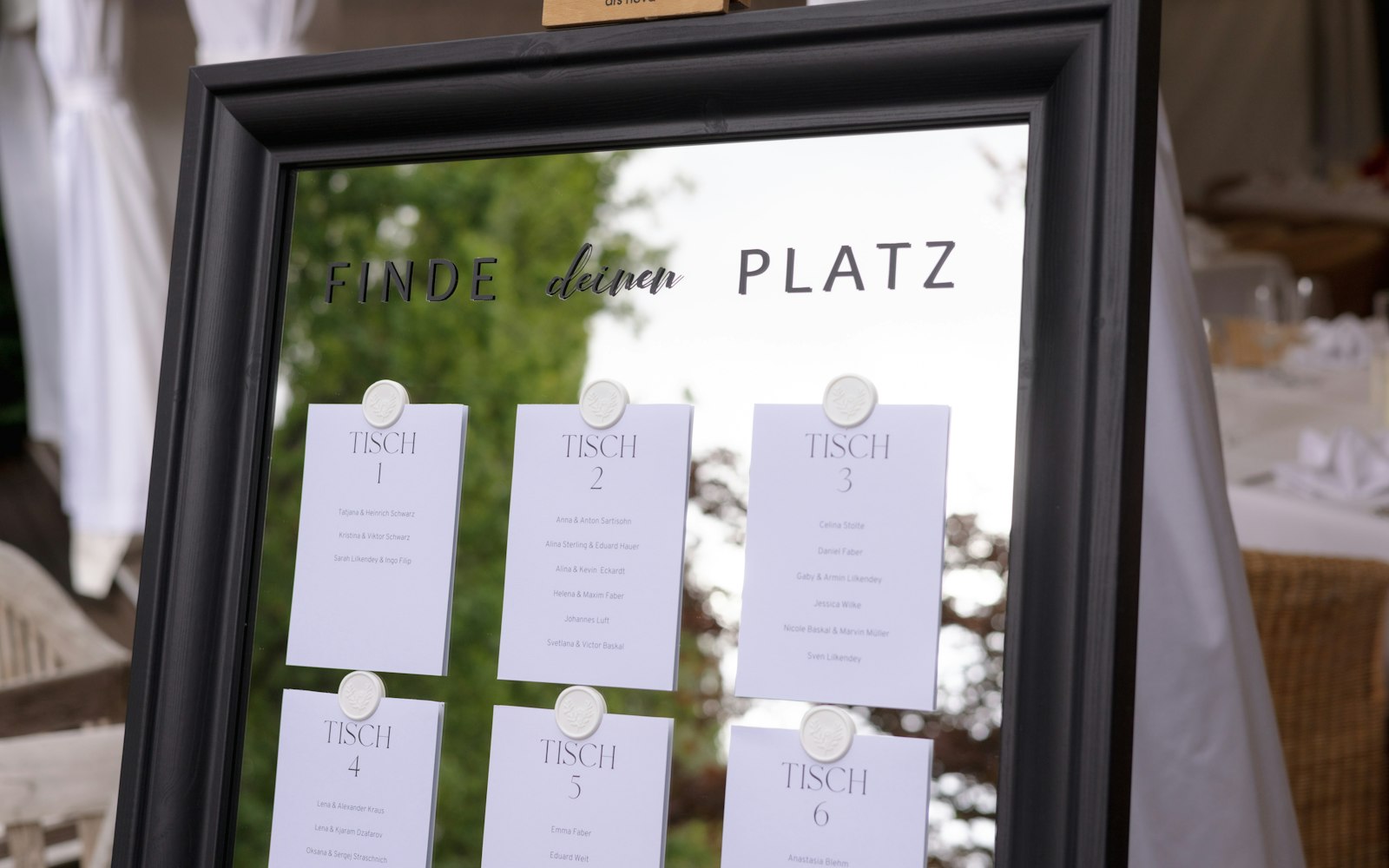
- Seating chart display: one large board or mirror at the entrance listing tables. Easiest for large weddings.
- Escort cards: individual cards that tell each guest their table; guests choose their own seat at the table.
- Place cards: a card at each seat, used when you assign exact seats, often with plated meal choices marked.
For a plated dinner, place cards with a discreet meal marker make service faster.
How do you share the chart with your venue?
Send the venue a table-by-table list with names, meal choices, allergies and any high chairs or accessibility needs, plus your floor plan. Bring printed copies on the day for your coordinator. At Everest, your coordinator takes the final chart and sets every table to match it.
Quick answers
When should a wedding seating chart be done?
Start after your RSVP deadline and finish one to two weeks before the wedding, by your venue’s deadline.
Who sits closest to the head table?
Immediate family, such as parents, grandparents and siblings who are not seated at the head table.
Should wedding guests choose their own seats?
For small weddings it can work, but assigned tables help large weddings run smoothly and keep groups together.
Where should divorced parents sit?
At separate tables of their own, both close to the head table.
What is the difference between escort cards and place cards?
Escort cards assign a table; place cards assign a specific seat.
Planning the room layout?
Your Everest coordinator will turn your seating chart into a floor plan and set every table to match.