Wedding uplighting: how to choose colours and how much you need
Lighting changes a room faster than anything else. Here is how to use it well.
4 min read · By the Everest team · Updated November 2026
Uplighting uses LED fixtures placed on the floor to wash walls, pillars and drapery with colour. Choose one or two colours that match your palette, favour warm tones such as amber, gold or blush for flattering photos, and plan roughly one fixture for every 8 to 10 feet of wall. Many couples switch to brighter or moving colours when the dance floor opens.
- Warm tones flatter skin and photograph well.
- Roughly one fixture per 8–10 ft of wall.
- Change colours for the dance floor to lift the energy.
What is wedding uplighting?
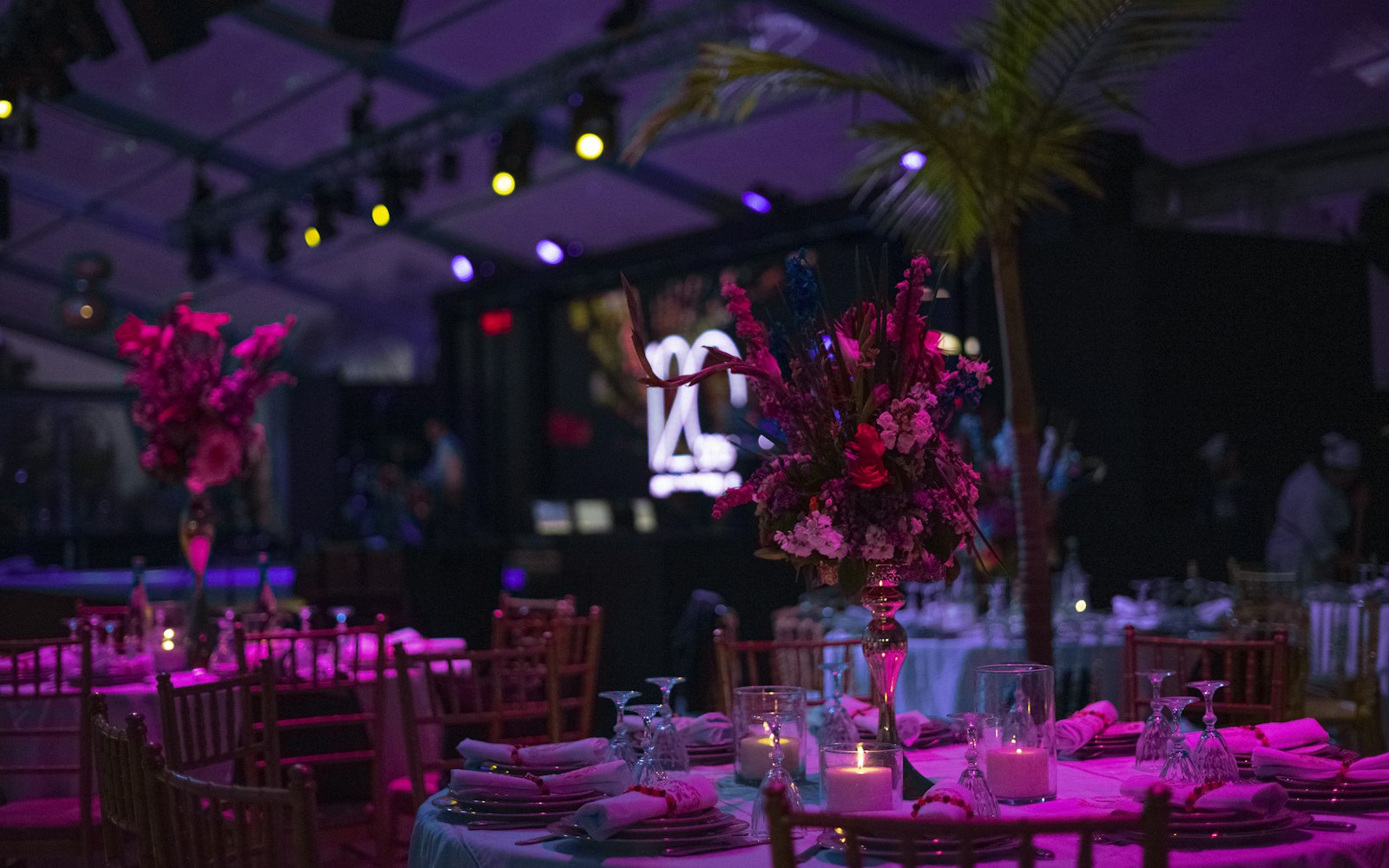
Uplighting is a set of LED lights placed at floor level, pointing up to wash walls, pillars, drapery and backdrops with colour. It sets the mood, hides plain walls, highlights architecture and makes a large room feel finished. Most modern fixtures can change colour and brightness, so the room can move from dinner to dancing without anything being moved.
How do you choose uplighting colours?
| Colour | Mood | Pairs well with |
|---|---|---|
| Amber or gold | Warm, candlelit, classic | Ivory, gold, greenery, winter weddings |
| Blush or soft pink | Romantic, soft | Pastels, white florals |
| Deep purple or plum | Rich, dramatic | Jewel tones, evening receptions |
| Blue | Cool, modern | Silver, navy, winter themes |
| Red or magenta | Bold, festive | South Asian receptions, sangeets |
| Warm white | Clean, elegant | Neutral palettes, ceremonies |
One main colour, or two that sit well together, usually looks more polished than many colours at once.
How many uplights do you need?
A common starting point is about one fixture for every 8 to 10 feet of wall, plus extras for pillars, the stage backdrop and any features you want to highlight. Larger rooms with tall ceilings may need more fixtures or brighter units. Your lighting team will confirm the count after seeing the room.
Should the colours change during the night?
- Ceremony: warm white or soft amber for natural light on faces.
- Dinner: your palette colours at a steady, softer level.
- First dance: dim the room and highlight the dance floor.
- Dance floor open: brighter, bolder colours, and moving lights if you like.
What are pin spots and monograms?
Pin spots are narrow beams aimed at centrepieces, the cake or the head table so they glow. A gobo projects a pattern, your initials or a monogram onto a wall or the dance floor. Both add polish and make photos look more professional.
What lighting tips do couples forget?
- Visit the venue at the same time of day as your reception to see the natural light.
- Share your colour palette and inspiration photos with the lighting team.
- Ask your photographer which colours they find hardest to shoot.
- Keep the bar and buffet well lit so guests can see.
At Everest, uplighting in your colours is installed by our own team as part of our décor and lighting. Pair it with our stage decoration ideas.
Quick answers
What is the best uplighting colour for a wedding?
Warm tones such as amber, gold or blush are the most flattering and photograph well. Match the colour to your palette.
How many uplights does a wedding need?
A common starting point is one fixture every 8 to 10 feet of wall, plus extras for the stage and features.
Does uplighting affect photos?
Yes. Strong colours on faces can look unnatural, so keep bold colours on walls and warm light near the couple.
Can uplighting change during the reception?
Yes. Most LED fixtures can change colour and brightness for dinner, the first dance and the dance floor.
What is a gobo?
A small stencil in a light that projects a pattern or monogram onto a wall or floor.
Planning your colours?
We light the hall in your palette, from the ceremony to the last dance.